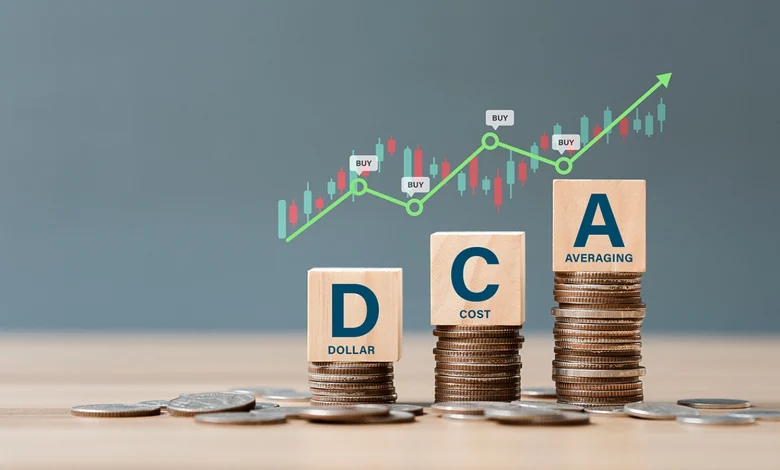
Building wealth can feel overwhelming, especially when markets swing unpredictably. Dollar-cost averaging (DCA) offers a steady, disciplined strategy that helps investors grow their money without trying to time the market. It is one of the most beginner-friendly—and surprisingly powerful—approaches to long-term investing.
What Is Dollar-Cost Averaging?
Dollar-cost averaging is an investment method where you invest a fixed amount of money at regular intervals—weekly, monthly, or quarterly—regardless of market prices.
Instead of trying to predict highs and lows, you steadily buy assets over time, accumulating more shares when prices are low and fewer when prices are high.
How Dollar-Cost Averaging Works
1. Fixed Contributions
You choose a specific amount—say, $200 per month—and invest it consistently.
2. Automatic Purchasing
Your investment is made regardless of market performance, removing emotional decision-making.
3. Share Accumulation
- When prices drop, your fixed contribution buys more shares.
- When prices rise, it buys fewer shares.
This smooths out your cost basis over time.
Why Dollar-Cost Averaging Is Considered Safer
DCA doesn’t remove risk entirely, but it helps minimize several common pitfalls:
Reduces Timing Risk
No one consistently predicts market tops and bottoms. DCA bypasses the need to time your entries.
Manages Emotional Bias
Fear and greed often derail investment plans. Automatic, scheduled contributions keep emotions out of the equation.
Encourages Long-Term Thinking
DCA shifts focus from short-term market noise to steady wealth accumulation.
Lowers Average Purchase Cost
Because you buy through both highs and lows, your average cost per share tends to be lower over long periods.
When DCA Works Best
Ideal For:
- New investors building discipline
- Long-term goals like retirement
- Volatile markets
- Anyone unsure when to invest lump sums
Less Ideal For:
- Investors aiming to capitalize on sudden market dips
- Situations where markets are steadily rising and a lump sum may outperform DCA
Still, for most everyday investors, the consistency of DCA provides peace of mind and long-lasting benefits.
Practical Steps to Implement DCA
1. Choose Your Investment
Common choices include:
- Index funds
- ETFs
- Blue-chip stocks
- Retirement accounts
2. Set a Contribution Schedule
Monthly is most common, but weekly or biweekly works well too.
3. Automate the Process
Most brokerages allow auto-investing—set it once and let your portfolio grow passively.
4. Monitor Progress Annually
DCA doesn’t require constant attention. A yearly review ensures investments still align with your goals.
Pros and Cons of DCA
Advantages
- Smooths out price volatility
- Builds consistent investing habits
- Reduces emotional decision-making
- Suitable for all experience levels
Limitations
- May underperform lump-sum investing in long bull markets
- Requires patience
- Does not protect against long-term market declines
DCA vs. Lump-Sum Investing
| Dollar-Cost Averaging | Lump-Sum Investing |
|---|---|
| Spreads investments over time | Invests all at once |
| Reduces timing risk | Can benefit from immediate market growth |
| Emotionally easier | Requires confidence and timing |
| Suited to beginners | Best for experienced investors |
The “best” strategy depends on market conditions and personal comfort levels. Many investors blend the two.
Final Thoughts
Dollar-cost averaging is not a shortcut to instant wealth, but it provides a reliable path to long-term financial growth. By investing steadily and ignoring short-term noise, you benefit from the natural upward trajectory of markets over time.
For most people, this approach reduces stress while increasing the likelihood of successful wealth building.
FAQs
1. Does dollar-cost averaging guarantee profits?
No, but it reduces the impact of volatility and helps create a lower average cost over time, improving long-term outcomes.
2. How long should I follow a DCA strategy?
Ideally for many years. The longer you’re invested, the more effectively DCA smooths market fluctuations.
3. Is DCA suitable for retirement planning?
Yes. It’s one of the most common strategies used in retirement accounts due to its consistency and simplicity.
4. Can I pause my DCA contributions during market downturns?
You can, but doing so defeats the purpose. Down markets are when DCA buys the most shares at attractive prices.
5. How much should I invest each month?
Choose an amount that fits your budget consistently. Even small, automated contributions can compound significantly.
6. Can DCA be used for cryptocurrencies?
Yes, though crypto is highly volatile. DCA can help manage risk, but investors should understand the market’s unpredictability.
7. Should I use DCA if I receive a large bonus or inheritance?
A blended approach works well. You can invest part immediately and spread the rest over several months using DCA.


