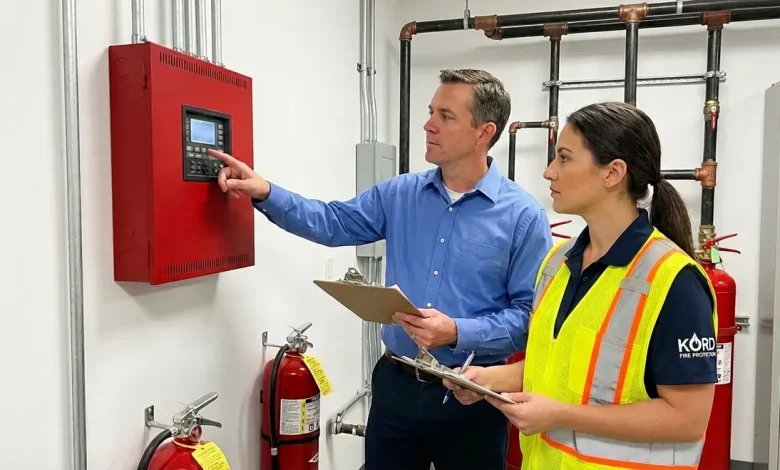
A fire watch has to fit the building and the operations inside it. A guard walking a generic loop satisfies a checkbox. A guard assigned to specific zones and hazards protects the business and its continuity. U.S. fire departments responded to an annual average of 7,966 structure fires at industrial and manufacturing properties during 2020–2024 (National Fire Protection Association).
Map patrol routes to the building’s blind spots
Patrol routes should be drawn from the floor plan before a guard is hired or a shift is scheduled. A route is meant to cover what fixed cameras and alarm panels cannot: blind corners and spaces hidden behind obstructions.
High-piled storage in warehouses is a common example. Stacked goods can hide smoke and block sightlines across a wide floor. Multi-level buildings create the same problem vertically, because one guard cannot watch two floors at once. Routes also need to pass every exit. A blocked exit found on patrol is one of the problems the watch is meant to catch.
The length of each patrol matters too. A patrol that takes forty minutes leaves each point unobserved for that long. The official fire logbook records patrol times, hazards, and corrective actions from the first patrol of the watch. It is the record a fire marshal or insurer will ask for.
Zone the facility by occupancy and hazard
Different parts of the same facility carry different risks. Zoning divides the building into areas that share an occupancy type and a hazard profile. Each zone gets its own patrol frequency and instructions.
Life safety occupancies rank highest when zones are sorted by risk. Healthcare centers, senior living facilities, and hotels hold people who may be asleep or unable to self-evacuate, so patrols there focus on early detection.
Storage zones with hazardous materials need a different protocol from ordinary floor space. Flammable chemicals raise the stakes of a small ignition, and guards posted there need to know what is stored in the zone.
Unoccupied areas still need coverage, but the purpose of each patrol changes with the zone. A closed warehouse section after hours is watched for ignition sources and hot spots, and logbook entries should reflect that purpose.
Get the plan approved by the authority having jurisdiction
The authority having jurisdiction, usually the local fire marshal or building official, decides whether a fire watch plan is adequate. The International Fire Code sets model requirements, but each municipality adopts and amends its version, so details differ from one jurisdiction to the next.
A fire alarm or sprinkler impairment is a common reason a fire marshal orders a watch. Coverage planning depends on which system is affected, the scope of the outage, and direction from local officials and site management.
The people running the watch should also know the local enforcement culture. Regional businesses under strict municipal oversight often research requirements through location-specific sources, and pages such as fastfirewatchguards.com/georgia/atlanta/ are one place to review what a given jurisdiction expects.
Time coverage around hot work and peak operations
Risk inside a facility changes by the hour, and a watch built on a fixed loop can miss that. Hot work is the clearest example. Before welding or other spark-producing work begins, the area should be inspected and the work authorized, preferably with a written hot work permit. A dedicated fire watch is required where more than a minor fire could develop, among other conditions.
OSHA’s welding and cutting rules and NFPA 51B, the hot work standard, set when that watch is needed and how it is run; NFPA 241 covers hot work during construction and renovation. The guard posted to hot work has one assignment: watch the work area and the surrounding zone for ignition. That post should not be combined with a building-wide patrol, because a guard watching the whole floor may miss sparks at the work site.
A facility’s production schedule should shape watch coverage as much as any permit requirement does. Overnight shifts with small crews and seasonal surges in stored inventory change the fire load and the number of people at risk.
An impairment on a busy production day needs more coverage than the same impairment on a quiet weekend.
Build communication into the patrol
A guard who finds smoke but cannot raise the alarm is a single point of failure. Concrete walls and below-grade levels create dead zones where radios drop signal, so the plan should map communication gaps along with blind spots.
The right fix depends on where the dead zones are. Some facilities assign relay points where a guard can reach a hardline or a known signal area. Others issue radios on a repeater system that reaches the full footprint, stairwells included.
The escalation chain should be written into the plan with the routes and zone maps. The guard alerts facility management and emergency services in a set order, with a backup contact if the first call goes unanswered. The logbook records any drill and any real activation, so the record shows the chain worked.
Start with the floor plan. Walk it, mark the blind spots and dead zones, and build the route and schedule from what is actually there.


