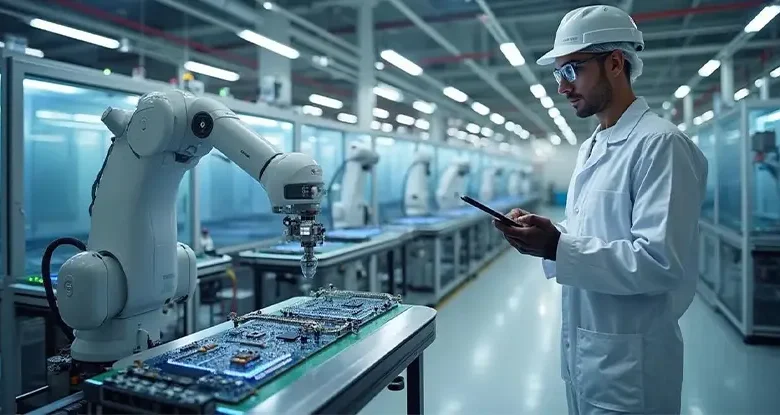
Thailand’s economy is undergoing a significant shift. For decades, the nation relied heavily on traditional manufacturing and agriculture. Today, a new wave of technological advancement is reshaping how businesses operate. From the bustling factories of the Eastern Economic Corridor (EEC) to the vast rice paddies of the central plains, automation is no longer a futuristic concept, it is a present-day reality driving productivity.
Factories that once depended entirely on manual labour are now integrating robotics and software to handle repetitive tasks. This change allows human workers to focus on complex problem-solving and quality control, roles that require creativity and judgment. As companies adopt intelligent industrial automation solutions, they find that production lines become faster, safer, and far less prone to error. This transition is vital for Thailand to remain competitive against regional neighbours like Vietnam and Indonesia.
The impact extends beyond heavy industry. In the agricultural sector, Thai farmers are beginning to use automated drones for crop monitoring and precise fertiliser application. This technology helps reduce waste and increase yields, ensuring that the country’s agricultural output remains robust despite labour shortages in rural areas. By automating these processes, farmers can manage larger areas of land with fewer resources, directly boosting their profitability and sustainability.
One of the most visible changes is occurring in Thailand’s logistics and warehousing sectors. With the rise of e-commerce platforms, the demand for rapid delivery has skyrocketed. Warehouses are now using automated guided vehicles (AGVs) to move goods efficiently. These systems work around the clock, sorting packages with speed and accuracy that manual handling cannot match. This efficiency ensures that customers in Bangkok or Chiang Mai receive their orders quickly, strengthening the entire supply chain.
The service industry is also feeling the effects. Banks in Thailand have moved towards automated kiosks and digital platforms, reducing wait times for customers. While physical branches remain, routine transactions are increasingly handled by machines. This shift frees up staff to assist with more complicated financial planning needs, improving the overall customer experience. Similarly, hotels and hospitals are exploring automated check-in systems and robotic assistance for basic tasks, streamlining operations during peak hours.
Adopting these technologies does present challenges. The initial cost of implementation can be high, particularly for small and medium-sized enterprises (SMEs). There is also a pressing need to upskill the workforce. As machines take over routine jobs, workers must learn how to operate, maintain, and programme these new systems. Thailand’s government and private educational institutions are responding by offering more vocational training focused on robotics and digital skills.
Ultimately, the drive towards automation is about doing more with less. It is about minimising waste, ensuring safety, and maximising output. For Thailand, embracing this technological shift is essential for moving up the value chain. As industries continue to modernise, the efficiency gains from automation will play a central role in the country’s future economic growth. The path forward involves balancing technological adoption with workforce development, ensuring that the benefits of efficiency are felt across the entire economy.